This is the eighth and last in a series of posts (first, previous) in which I am exploring five key technology themes which will shape our work in the coming decade.
The Strategic Business Impacts of our Technology Themes
Having analyzed our five technology themes, and explored their operational impacts, let’s look at the strategic impacts.
Here again is a recap of the five themes:
The Emergence of the Individual Narrative
Consumers’ life journeys become the data heart of operational and analytic systems.
The Increasing Perfection of Information
Complete, accurate data presented in meaningful contexts is available on demand where and when it is needed.
The Primacy of Decision Contexts
Business processes evolve into the automated integration of expert decisions, which themselves will be increasingly automated. Health decisions by consumers and caregivers alike will be optimized with rich contexts of knowledge, recommended actions, and insights.
The Realization of Rapid Solution Development
New and improved information tools are delivered, adopted, and retired at a rapid cadence.
The Right-Sizing of Information Tools
Monolithic applications give way to business palettes of discrete, targeted tools integrated and orchestrated across a common backbone of services and events.
The Elephants in the Smoke-Filled Room
Sometimes it seems like there is a parade of elephants in the proverbial smoke-filled room where strategy is hatched. We will cut two out from the herd.
Healthcare’s Innovator’s Dilemma
Can you effectively innovate toward the future of the 2020’s while sustaining your current business?
‘The Innovator’s Dilemma’ priest and his acolytes say not within a single organization, that maintaining that the goals of the two efforts are simply incommensurate.
“With a few exceptions, the only instances in which mainstream firms have successfully established a timely position in a disruptive technology were those in which the firms’ managers set up an autonomous organization charged with building a new and independent business around the disruptive technology.”[1]
“The two goals conflict for resources.… [I]nnovations usually have lower profit margins at first, and pay off in the long term. Plus, the people who are very good at operating the core business are very different from the entrepreneurial ones, with their agile, adaptive mind-sets, that you need to run disruptive stuff. What can work is to separate out the disruptive entity, protect it, and let it operate by a different set of rules than the core business.”[2]
In the belief that the Future Is Data (hint, it’s not), many of us have tried splitting out data organizations. Others of us have gobbled up advanced technology firms and tried to integrate them.
There are challenges on the organize-around-data-and-tech-to-win path.
Success with analytics requires a culture change. It requires fine-grained engagement at all levels of the business – execution, management, and strategy – which can’t be done well from a separate hierarchy. Historically, formal organizational matrixing doesn’t work well – at very least, Nokia’s nose-dive has made us all gun-shy about giving Matrix 3.0 a go. (DEC was 1.0). There is a new organizational structure emerging that is much more fluid, and is based on the joint Business+IT agile kind of process I have been advocating here. It is not clear yet what the organization infrastructure needs to look like to fully support that. (I have not put the legwork into researching it yet – future post.) But is it definitely not having your data and analytics in a separate silo from your operations – do that and Conway’s Law will land on your architecture like Dorothy’s house on the Wicked Witch of the East.
Same kind of challenge exists if you try to innovate by buying a technology company. Say you try to get a leg up by buying a healthcare blockchain firm, thinking that is the path to innovation. It is incredibly difficult to find the sweet spot where the tech is just far enough ahead to contribute to problems you have right now. And in today’s increasingly interconnected world, that means selling your trading partners on the new path as well. And, even though we are all in an information business, the culture of tech firms is very different than large healthcare IT shops – I have worked in both. The cultural assimilation can be very challenging.
Another challenge is that – this is the Innovator’s Dilemma thinking[3] – tasked with both ongoing support for your primary business and driving innovation how do you prioritize your investment of both money and resources?
My fundamental answer to these challenges from a strategic technology position is simple: architect with services and events. Rent the services you can, build the ones you can’t, and integrate your processes with events.
It is a service ‘layer of abstraction’ around your legacy monoliths that will enable you to integrate them with innovative processes and tools. It is the grain of reuse provided by services that will enable you to establish the fast-paced solution delivery cycles the fast-changing path of the 2020’s success demands.
It is the fine temporal grain of events that will enable you to become a real-time, continuously connected enterprise.
When do you build them? All the time. Every time you do a point-to-point integration, every time you build functionality of any kind, is an opportunity to build a service. Every action taken by a user, human or system, is an opportunity to publish an event.
Problems on that path?
It is not always the cheapest path within a typical-these-days 18-month ROI horizon. It generally takes more time and money to bust out and integrate a new service than it does to whip out an ETL job. Although you will get faster at it over time. Instrumenting your environment for events is difficult – for services, you can build them around an event-sourcing persistence model, for legacy client-server apps you will have to instrument their databases using (in order of preference) change data capture or triggers or micro-queries.
You may not have a breadth of service-building and event publishing and consuming skills across your IT org today, just pockets of them.
The solution?
Make building and using services mandatory, requiring bureaucratic exception to avoid. Make triggering processes with events your first choice by fiat.
Put in controls so the relentless heat of the time and money crucible doesn’t melt your service and event objectives away with the slag.
Build out your services and events infrastructure – the API gateway, the stateful streaming events solution, the service standards and references, the messaging and orchestration plumbing – right away.
To be clear, this is related to the Cloud – the ready-made palette of services available through Cloud-based APIs is growing rapidly, and you need to make it accessible to your solutions – but is not only about the Cloud. The training you need to focus on most is about using the Cloud – and in its most fundamental form that means using services.
Realizing your Vision
How do you realize the consumer-centric vision you will need to compete this decade? Let’s go back to ground zero and think our way into this.
What is ‘Health’ Exactly, Anyway?
No, seriously. We all have to be on the same page from the beginning. Page Zero. So what is ‘health’?
The World Health Organization defines it as ‘a state of complete physical, mental and social well-being and not merely the absence of disease or infirmity.’
Others take issue with that definition, unchanged since 1948, and suggest it ‘will not do in in an era marked by new understandings of disease at molecular, individual, and societal levels’[4].
We need an actionable definition of ‘Health’ to describe an architecture strategy around it.
Let’s try this: “Health is the set of an individual’s physical, social, and inner states which contribute directly or indirectly to their well-being.”
Let’s further define a ‘Health Substate’ as a discrete state which is a member of that set.
At any given moment – at every moment – each person – for you, each health consumer – is in a particular state of health made up of some part of their overall physical, social, and inner states we are calling ‘health substates.’
- Some health substates do not change at all, such as race.
- Some health substates change slowly, such as weight.
- Some health substates change cyclically, such as blood sugar.
- Some health substates change at a constant rate, such as chronological age.
- Some health substates change at a point in time, such as a bone breaking.
Some substates of their future health journey, their evolving future state of health, are made more likely by their historical states. Some are dictated by habits, patterns, addictions. There is a kind of state inertia at work and a resulting ballistic health trajectory.
The technology perspective on this is from the consumer narrative structure I discussed earlier in ‘The Emergence of the Individual Narrative.”
Some substate changes result from things that are done to the health consumer that are out of their control, such as accidents, physical harm or coercion, and imprisonment.
But much of the consumer’s path through life – their world line, their evolving physical and group state – is determined by decisions they make, or decisions made for them and about them.
All-In on Software Interoperability
To recap, the consumer’s health experience is formed in a number of ways:
- Living with their state of health and that of their loved ones and charges
- Accidents, injuries, and acute illnesses
- Genetic, sex, racial, ethnic, and socioeconomic factors
- Diet, lifestyle choices and activity levels
- Friends, neighbors, co-workers and community involvement and social collaboration
- The scheduling of, delivery of, payment for, and consequences of physical and mental care
- Agreements governing the nature, cost and access to care
- Directly and indirectly health-related apps and communications
The scheduling of, delivery of, payment for, and consequences of health care nowadays are largely informed, managed and recorded by apps used by the Provider.
Agreements about health care and its payment are usually effected in software. Transactions under such agreements are largely managed by software applications.
Consumer communications are either
- real-time interactive, such as in person and on the phone;
- asynchronous and interactive, such as text, chat, email, voice mail and mail;
- or non-interactive (but hopefully uniquely tagged for tracking their impact), such as mail merges, tv, print and web ads and billboards.
In person and telephonic communications are frequently informed and recorded by software applications. Telephone communications may actually be with a robot, which is a software application backed by other software applications.
Text, chat and email are done with software applications used by people and robots.
Mail-merges are created with software applications. TV, print and web ads are frequently created with and sometimes personalized by software applications.
Much of a consumer’s health experience – and more and more of it over time – is created by, informed by, managed by, and tracked by software applications.
To realize our collective vision we need to enable consistent, connected, coordinated, orchestrated behaviors across health-related software applications used by consumers, their influencers, their care providers, and their contracted partners.
The industry framework needed to deal with the rise of consumerism is an interoperability software framework. That may have been obvious to most of you, but it felt good to type it out loud.
The more comprehensive the integration and use of the framework, the more the consumer will be empowered to manage their care, and the more transparent their health path will be.
Interoperability is key. Today’s software solutions are distributed. Interoperability is not about exchanging data (pls see this post for more on that.). It is about enabling consumer-related business processes to span organizational boundaries.
Your specific strategy? Determine the true nature of your expertise. Surface that expertise through standards-based APIs. Partner with other organizations to provide consumer solutions that are, transparently to the consumer, distributed across the health ecosphere.
Go all in on Interoperability.
Inner States Drive Decisions
There is an old saying that big purchases – cars, houses – are made by emotion, not reason. Emotion and reason are both inner states. All decisions are determined by the decision makers’ inner states.
There is a particular inner state whose presence and use characterizes intelligence: the goal.
“Intelligence…is the ability to attain goals in the face of obstacles by means of decisions based on rational (truth-obeying) rules.”[5]
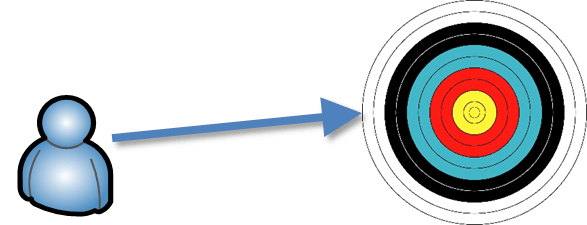
The Consumer has goals. Let’s define a goal as ‘the desired achievement of a particular state of affairs during some future range of time.’ An objective is a goal for which the state of affairs and range of time are explicitly described and measurable.
The consumer actually has many goals. Some of the goals are sub-goals whose achievement moves the consumer closer to more distant goals. The net result is a complex lattice of goals that evolves over time.

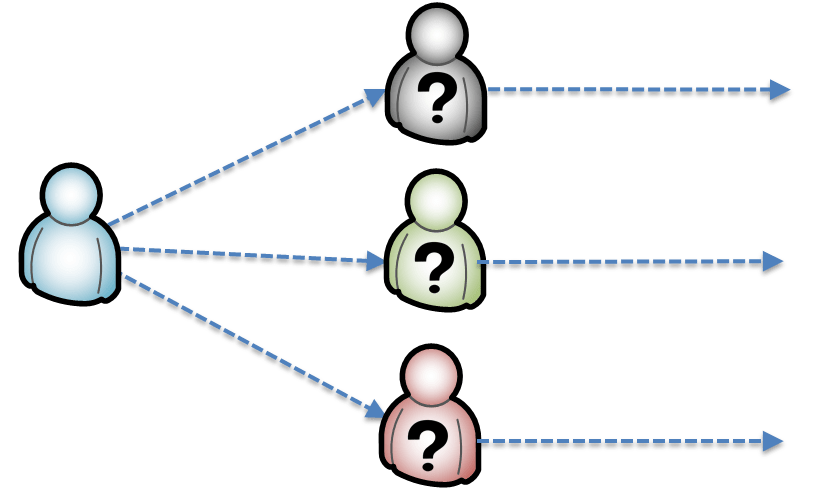
The Consumer’s path is determined in large part by choices they make, and the choices others make about them. Those choices are driven by their inner states. Goals bring structure to decisions – without them we are just picking random waves, dude.
We need to help the consumer identify and manage their health-related goals.
Enriched Health Decision Contexts
Then we need to strip away the contingent information plumbing and identify the consumer health decision contexts.
Having done so, we must enrich those decision contexts:
- We need to show the consumer the full range of choices they have.
- We need to show them the predicted consequences of those choices – how those choices impact their achievement of their goals.
- We need to curate the contextual knowledge they need to make optimal choices.
- Where we can provide meaningful intelligence through decision automation we should recommend choices.
- We also need to let them know when they need expert guidance from a care provider to make good choices.
The success of this decision-context-enrichment approach is depended on the consumer’s trust in us. They have to trust our curated knowledge, our recommendations, our predictions. They have to trust we are protecting their privacy.
The key to establishing trust is transparency. If the consumer can see all our uses of their data, if they can see how we arrived at our conclusions, if they can see our curation processes, we will gain their trust.
Mozart in the Health Jungle
Our industry Interoperability framework must focus on providing seamless, frictionless experiences driven by and integrated by the consumer.
What does that mean with respect to its technology solution?
The consumer needs to be able to orchestrate the enriched health decision contexts we provide. The contexts are the instruments, they are the conductor. We need to enable them to sequence or chain the series of decisions on paths toward their goals like the movements of a symphony.
Some of these paths – this is the consumer journey enrichment – we should provide as ‘scores’; or ‘recipes’ for their use. Other paths they should be able to compose themselves using simple logic – if this happens, then this should happen. The information flow needed to enable those journeys should be fully automated and transparent to them.
The small, dedicated applications they will be orchestrating need to share common code, common logic in order to provide common behaviors.
Communication channels will continue to evolve. Machine to machine communication – the extension of automated processes across corporate boundaries, will become increasingly important. Robot intelligence will play an increasing role in our health care lives.
Today’s “Alexa, what’s the forecast?” will become tomorrow’s “Dr. Alexa, I have a sharp pain in my lower abdomen. What should I do?”
To realize our vision for the coming decade we need to enable consistent, connected, coordinated, orchestrated behaviors across those decision-context presenting health-related software applications used by consumers, their influencers, their care providers, and their contracted partners – both human and robot.
What is the technology needed to realize this?
The Rising Cloud Floats All Boats
It’s not the Cloud per se. The movement to the Cloud is inexorable – it is like the tide. And like the tide it floats all boats. Everyone is going to the Cloud. It is cheaper, and faster, which is cheaper. But there is simply no sustainable competitive advantage there. Early payer and provider adopters have gotten false comfort from the illusion of being out ahead when we compare ourselves to each other. But if we compare ourselves to the emerging health solutions technology space, we see a different picture.
And a technology view based on a cloud technology plumbing stack is not a cogent architectural perspective for the solution space we have been discussing.
Core Framework Features
There are a set of common features our API-based industry Interoperability framework must have to accomplish this – contrast this list with the current goal state of Interop as described in TEFCA and the CMS+ONC API specs:
- Consumer Identity Management
- All applications need to be communicating with, to and about the same consumer in order to coordinate their behaviors. This is a key challenge.
- Consumer Control and Transparency
- The Consumer must be in control of and knowledgeable about all uses of their information by all parties.
- Consumer Event Pub Sub
- Notable physical, social, and internal consumer events must be broadcast in a guaranteed delivery manner to all interested applications – and received from all participating applications
- Consumer Event History
- A comprehensive narrative of consumer events with time, agent, intent, action, tool, pre-state and post-state.
- A comprehensive narrative of consumer events with time, agent, intent, action, tool, pre-state and post-state.
- Common Vocabulary
- Consistent behavior is predicated on consistent semantics
- Consumer Decision Science
- Comprehensive decision context enhancement, including information and options for particular kinds of consumer health decisions. Encompasses health modeling and analysis: the consumer’s current state of heath, the segments they are in, their projected health trajectory, and alternate paths given treatment and behavior choices
- Consumer Goals
- Tracks and manages the lattice of explicit and inferred consumer goals. The key to goal directed behavior and the beneficial application of decision science.
- Workflow
- Consumer-directed rule-based workflow management
- Goal-directed decision-science driven workflow when enabled/permitted by consumer
Conclusion
We are all in an information business. As such we have always been technology companies. The changing nature of the health care market, the rapid rise of consumerism, has finally brought that home to roost.
For us to all realize our visions in this decade, we must make both operational changes as well as strategic changes.
Common technology impacts will influence both of those.
The perfection of information and emergence of decision contexts will force us to distill down the nature of our expertise, our value.
The real-time future will be upon us before we realize it. Only the automation that enables that distillation will prepare us to face it.
The right sizing of information tools will shape how we evolve the toolkits our experts use.
And finally, our aggressive adoption of the consumer-narrative-centered technology future will be the key to our success.
That’s it for this series – thanks for reading.
Stay tuned.
[1] Clayton Christensen, ‘The Innovator’s Dilemma: When New Technologies Cause Great Firms to Fail’, Harvard Business Press, 1997.
[2] David Duncan of Christensen’s consulting firm Innosight as quoted in Harvard Magazine July/August 2014 http://harvardmagazine.com/2014/07/disruptive-genius
[3] I’ve sipped the ‘Innovator’s Dilemma’ Kool-Aid but am not drunk with it. I am not at all sure that what we are doing in healthcare qualifies as whatever is left of the ‘Innovator’s Dilemma’ definition of a disruptive technology after twenty years of Clayton Christensen getting beaten up in the press and academia (you know you have succeeded when there are academic movements against you.) But the key idea, that the goals of aggressive innovation and the goals of sustainment are largely incommensurate, seems sound.
[4] From The Lancet, Volume 373, Issue 9666, Page 781, 7 March 2009 as reported in ‘What is Health, What Does Good Health Mean’ retrieved from http://www.medicalnewstoday.com/articles/150999.php
[5] From ‘How the Mind Works’ by Steven Pinker

 Health IT Architect